News
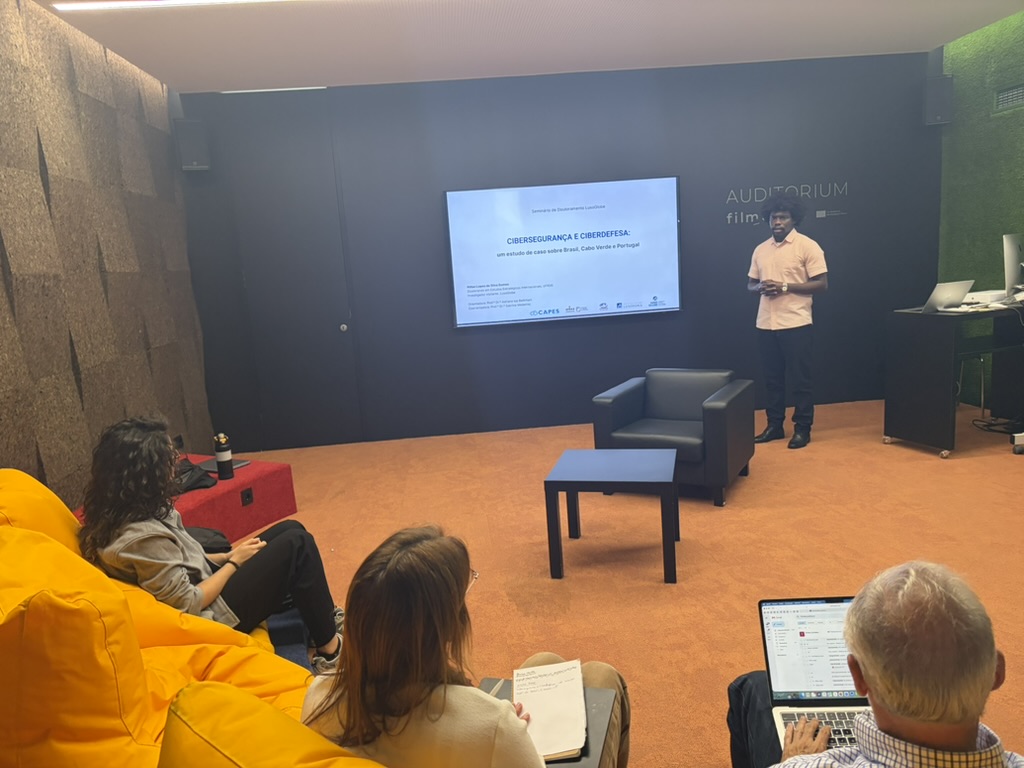
LusoGlobe Doctoral Autumn Seminar 2026
LusoGlobe – Lusófona Centre on Global Challenges hosted a Doctoral Seminar on 7 October 2026, at 11:00, featuring our visiting doctoral researchers Nilton Gomes (UFRGS) and Elisa García Lerena (U Complutense Madrid).
The session was led by Professor António Costa Pinto and will included the participation of Sabrina Medeiros, Teresa Ruel, Filipe Nobre Faria and LusoGlobe visiting researcher Ana Luiza Gama. The seminar is part of LusoGlobe’s academic activities and will provide a space for the presentation and discussion of ongoing doctoral research, fostering academic exchange among researchers at different stages of their work.
The event is particularly relevant as it brings together researchers who are joining LusoGlobe as visiting researchers during the current academic year, strengthening the Centre’s international dimension and promoting the exchange of knowledge across institutions, research areas and academic contexts.
The initiative is part of LusoGlobe’s broader strategy to support doctoral research, expand its academic networks and create regular opportunities for discussion and collaboration between visiting researchers and members of the Centre.
Date: 7 October 2026
Time: 11:00 - Where: K4 FILMEU
Organised by: LusoGlobe – Lusófona Centre on Global Challenges



Research featured in international Q1 Special Issue on religion and secularisation
The international academic journal Religions has published the Special Issue “Europe, Religion and Secularization: Trends, Paradoxes and Dilemmas”, guest edited by LusoGlobe researcher and Associate Professor at Lusófona University Jorge Botelho Moniz, together with Grace Davie, Professor Emerita at the University of Exeter and a leading international scholar in the sociology of religion and secularisation studies.
Religions is an international peer-reviewed journal indexed in Scopus and the Arts & Humanities Citation Index of Web of Science. It is currently ranked in the first quartile, Q1, in the Religious Studies category according to the Scopus CiteScore classification.
The Special Issue brings together ten scholarly contributions addressing transformations in religion and secularisation in contemporary societies. The contributions examine issues including religious diversity, emerging forms of religiosity, state-religion relations, generational change, freedom of religion or belief, populism, digitalisation, war, and the broader effects of social and political change on the relationship between religion and modernity.
The collection also includes the editorial “Europe, Religion and Secularization: Trends, Paradoxes and Dilemmas”, authored by Jorge Botelho Moniz and Grace Davie and published in 2026. The editorial revisits the debate on secularisation in Europe, considering both transformations in religious institutions and the continuing presence of different expressions of the sacred within contemporary European societies.
The Special Issue has already attracted more than 20,000 views on the journal’s platform, reflecting the academic and wider public interest generated by the subject.
The coordination of this Special Issue represents another significant outcome of the internationalisation of research at LusoGlobe, promoting collaboration among scholars from different institutions and strengthening Lusófona University’s presence in international debates on religion, secularisation, and political and social transformation.
Article Publication on Mapping Discrimination
LusoGlobe researcher Nélson Ramalho and Sandra Palma Saleiro, researcher at CIES-Iscte, have published the article “From Written Law to Lived Law: Mapping Discrimination Based on Sexual Orientation, Gender Identity and Expression, and Sex Characteristics in Portugal” in Áreas: Revista Internacional de Ciencias Sociales, a journal indexed in Web of Science and ranked Q4 in Social Sciences, Interdisciplinary.
The article examines the extent to which legal advances in Portugal have translated into effective protection against discrimination for LGBTI+ people. The study draws on research commissioned by the Commission for Citizenship and Gender Equality and includes evidence collected through focus groups and interviews with representatives of 22 associations and collectives.
The findings indicate that, despite significant progress in the legal recognition of rights, discrimination continues to affect LGBTI+ people in several areas of everyday life, including healthcare, education and employment. The article therefore draws attention to the persistent gap between formal rights and lived experiences, highlighting the importance of strengthening public policies and institutional responses aimed at preventing and addressing discrimination.
The full article is available here: https://revistes.ua.es/areas/article/view/33198
Participation at the Université de Montréal
Cristina Nunes presented the seminar Mapping Social Movements in Portugal During and After Austerity (2011–2025) at the Université de Montréal on 27 August, from 2:00 p.m. to 4:30 p.m. The seminar has examined the evolution of social movements in Portugal between 2011 and 2025, focusing on patterns of protest during the austerity and post-austerity periods through protest event analysis.
Democracy under Siege: LusoGlobe Participates in International Convention on Fascism Studies
The Lusófona Centre on Global Challenges (LusoGlobe) participated in the Eighth Convention of the International Association for Comparative Fascist Studies (ComFas), taking place on 19 June 2026 at the Sedas Nunes Auditorium, ICS-ULisboa.
Under the theme “Democracy under Siege: Global Fascism – Populism – Illiberalism”, the event brought together international scholars and specialists to reflect on the contemporary challenges facing democratic systems, including the global resurgence of authoritarian narratives, illiberal governance models, and extremist political movements.
The convention also included the special session “Mapping and Extending the Field: A Celebration of António Costa Pinto’s Contribution to Comparative Fascism Studies”, recognising the internationally acknowledged contribution of Professor António Costa Pinto to the development of comparative studies on fascism, authoritarianism, and political regimes.
The initiative is organised by ComFas and ICS-ULisboa, with the support of several academic and scientific institutions, including the Fundação para a Ciência e a Tecnologia (FCT), APCP, MEMHIS, SPARC/RIGOP, and FLAD.
More information:
Lusófona Student Selected for the Youth Democracy Summit 2026
Catarina dos Santos Barreiras de Abreu, a second-year student in the Master’s Degree in Diplomacy and International Relations at Universidade Lusófona, has been selected as a delegate to participate in the Youth Democracy Summit 2026, which will take place in Rome, Italy, from 1 to 4 October 2026. She was awarded one of the fully funded places available for participation in the event.
Organised by the Center of International Policy and Sustainability (CIPS), the Youth Democracy Summit brings together young leaders and professionals from different countries to foster dialogue and exchange experiences on democracy, international cooperation, public policy and governance.
The programme includes policy dialogues, interactive workshops and activities designed to connect participants with institutions and professionals working on key challenges on the international agenda. A visit to the headquarters of the Food and Agriculture Organization of the United Nations (FAO) in Rome is also scheduled.
Participation in the Summit offers an opportunity to deepen knowledge across different areas of International Relations through direct engagement with institutional representatives and participation in an international environment of debate and learning. The event will also enable participants to build networks with young delegates from more than 100 countries.
Catarina’s selection as a fully funded participant in the Youth Democracy Summit 2026 recognises her academic trajectory and her interest in diplomacy, governance and international cooperation. It also reflects the international engagement of students within the academic and research environment of Universidade Lusófona.
LusoGlobe congratulates Catarina on this achievement and wishes her a productive participation in the Youth Democracy Summit 2026.
Source: Universidade Lusófona


